
Running a moving business, you are aware how much effort and money goes into generating a single high-quality lead. You constantly optimize your website, run Google ads and build your local reputation just to get a homeowner to fill out a quote request. But you know it doesn’t end there. The real battle is won in the follow-up.
Stand Out From Local Competition
When a potential customer reaches out, you can be sure they are also requesting quotes from three of your local competitors. In this highly competitive environment, relying on a single email with a price attached is a massive revenue killer. The company that provides value and communicates most clearly is the one that wins the job. Let’s go through exactly how to build a follow-up email sequence that stops leads from slipping through and increases your booking rate.
Why the “Quote and Wait” Method Fails
The problem with sending a quote and waiting for the customer to reach out is that it assumes the customer has the time and mental energy to chase you down. They don’t. The modern consumer expects to be guided through the purchasing process. If you send an estimate and never follow up, they simply book with the competitor who took the time to check in and ask if they had any questions.
When to Follow Up: The Exact Timeline
Too many movers wait too long to follow up, letting the lead go cold, or they send reminders at the wrong time, frustrating the customer. The optimal follow-up formula starts with knowing exactly when to reach out so every prospect stays warm and engaged.
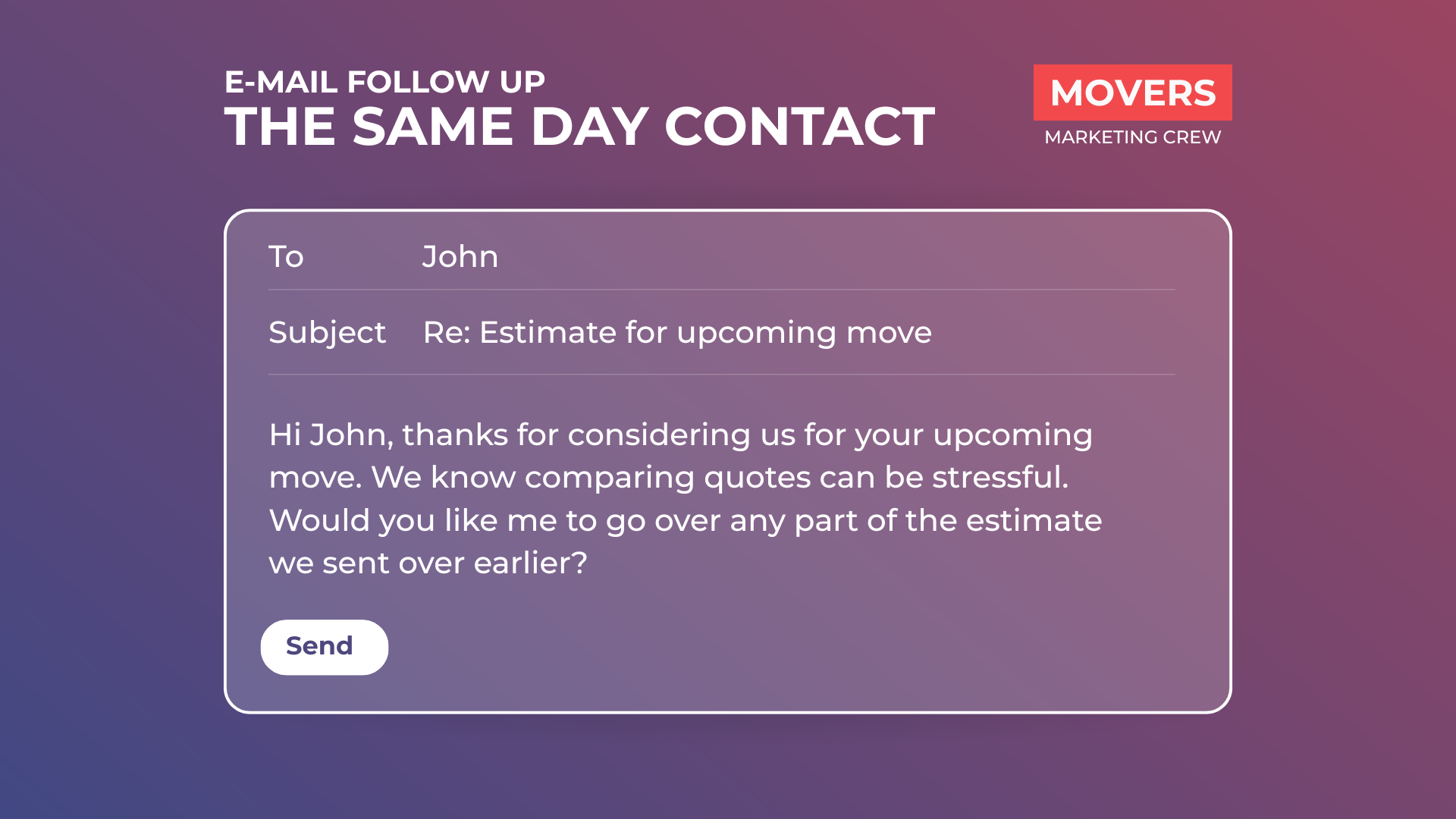
The Same-Day Contact
After you send their estimate, always follow up later that same day with a simple thank-you message and ask if they have any questions about the estimate. Do not be overly aggressive or demand immediate booking. The point is to keep the conversation open.
The 24 to 48 Hour Nudge
Within this timeframe, send a friendly nudge. This is the period where the customer is actively comparing quotes from different companies. Reaching out here to see if they need more details keeps your company at the top of their inbox.
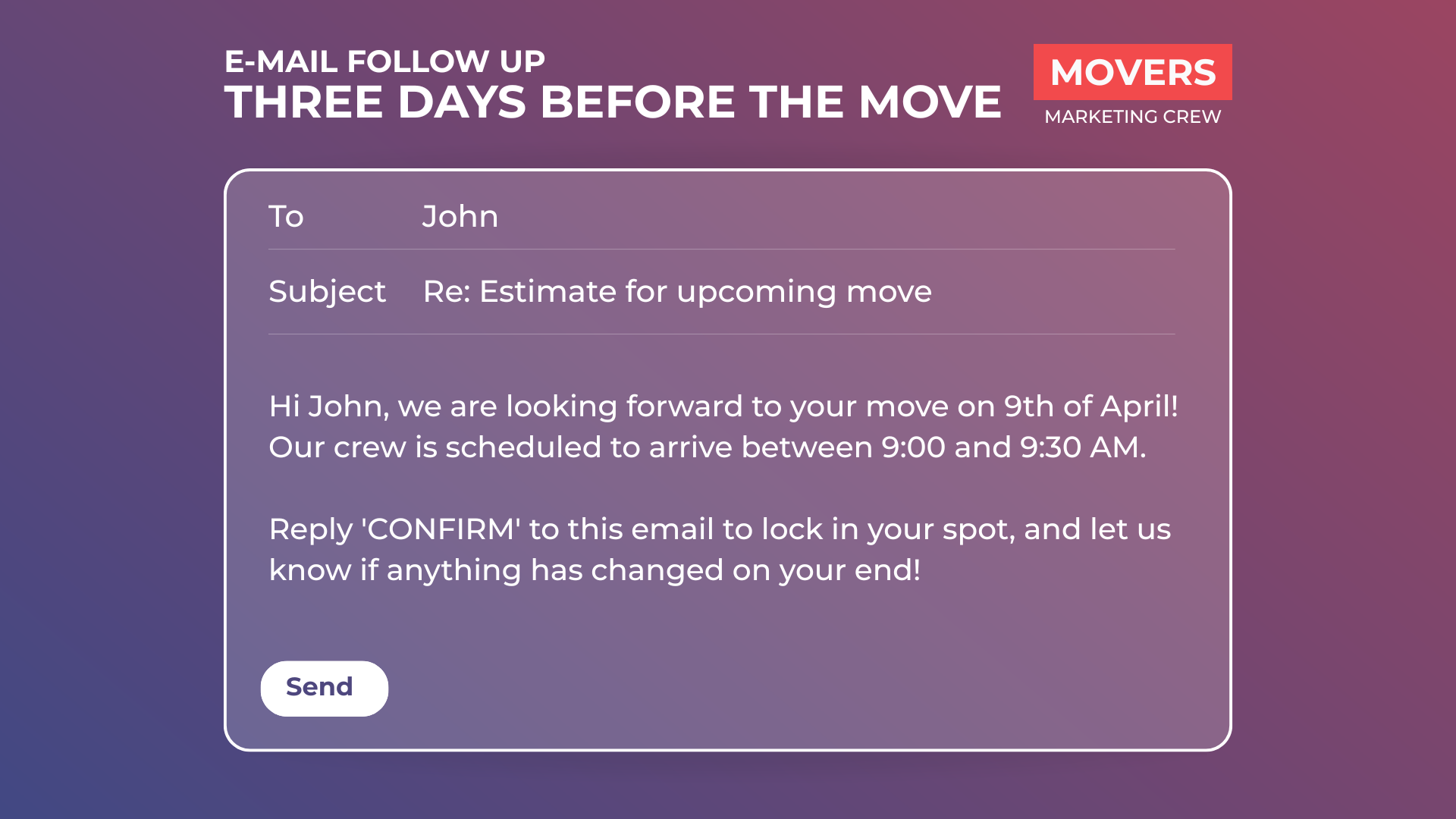
Three Days Before The Move
Once the job is booked, the follow-up sequence shouldn’t stop. Cancellations and misunderstandings cost you money. Before the move, schedule automated reminders three days ahead of time. This gives the customer peace of mind and confirms the booked move. Include the exact date, the expected arrival time of your crew, and a short checklist to help the client prepare.
One Day Before The Move
The day before the move, send a final confirmation. This eliminates confusion on moving day, and ensures your crew isn’t sitting outside an empty house. Once again, remind them to clear a parking space for the truck or secure their pets, making the moving day smoother for everyone involved.
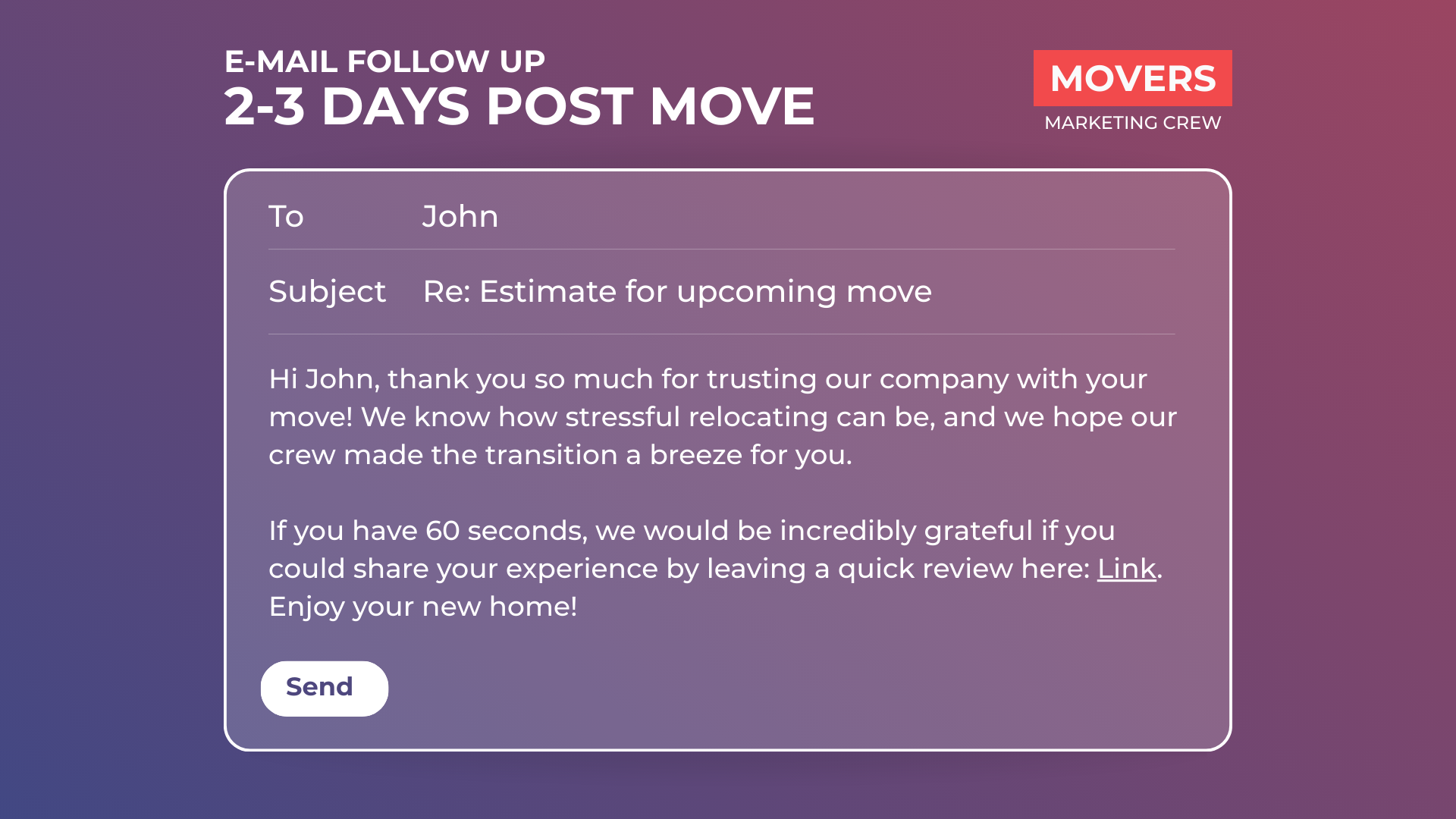
Two To Three Days Post Move
After the move is completed and the final bill is paid, check in within two to three days. Ask if everything went well and if their belongings arrived safely. This level of customer service is rare in the moving industry and leaves a lasting positive impression. You can also include a link to your Google Business Profile for them to leave a review, if they haven’t done it already.
Common Mistakes To Avoid
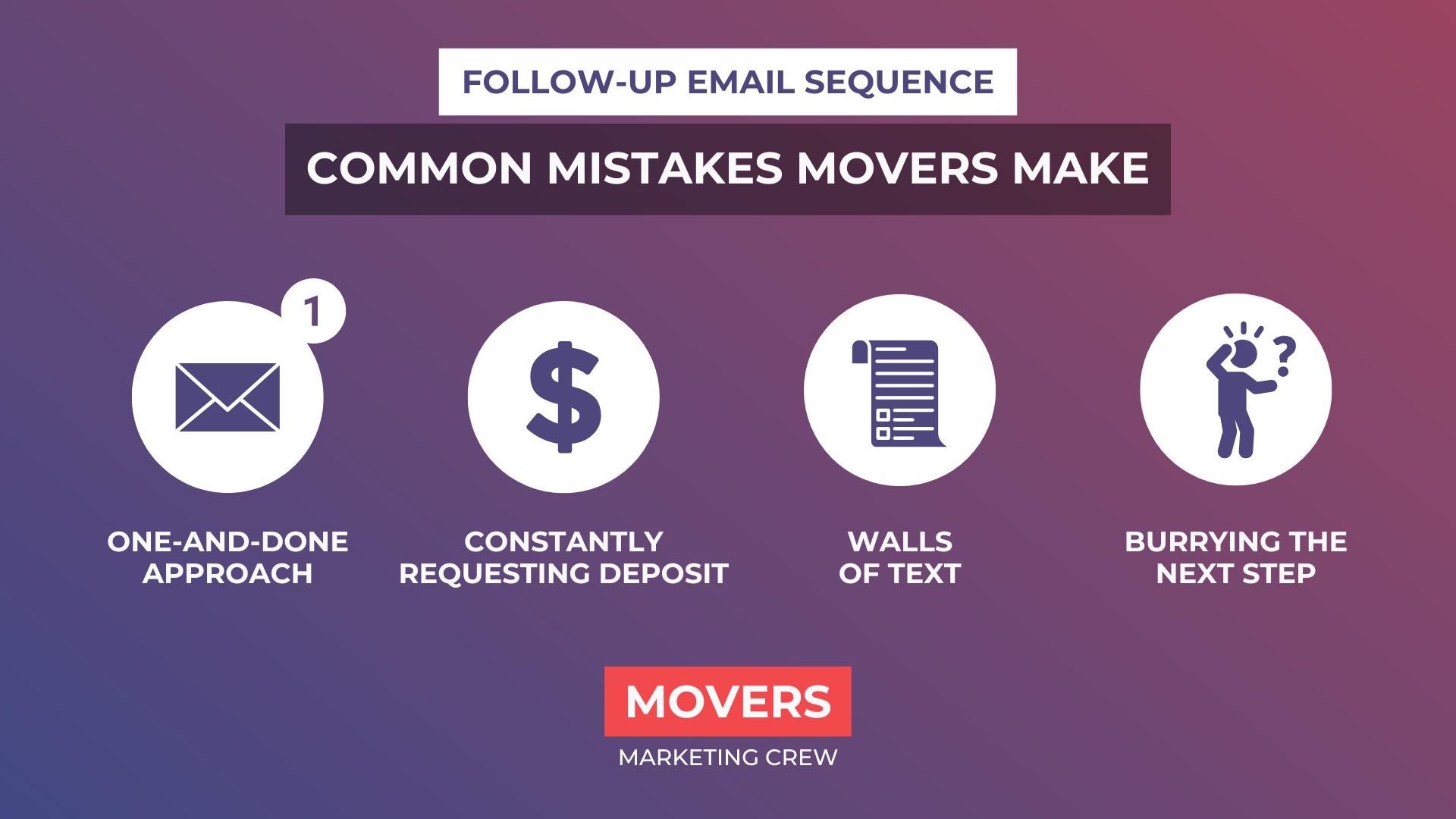
The “One and Done” Approach
Some movers send the initial estimate, and a single follow-up email a few days later, and then completely write off the lead if they don’t get a response. In reality, a homeowner might open your first email while waiting in line at the grocery store, get distracted, and simply forget to reply. If you give up after one attempt, you are handing a warm lead directly to the competitor who had the patience to follow up multiple times.
The “Ready to Book” Trap
If every single email in your sequence is just a variation of “Hey, are you ready to put down a deposit?”, you are going to exhaust your prospects. Yes, the ultimate goal is to book the job, but your emails also need to provide value and build trust. Send them a link to your ultimate pre-move packing guide, a checklist for moving day, or a quick breakdown of the estimate they received.
Sending a Wall of Text
When a homeowner is staring down a house full of unboxed items, the last thing they want to do is read a 600 word essay about your moving company. Use short sentences, bold your key points, and get straight to the reason you’re reaching out.
Burying the Next Step
What do you actually want the customer to do next? One of the biggest mistakes movers make is leaving the email open-ended. If you want them to review their customized estimate, provide an impossible-to-miss link. If you want them to confirm a date, put your phone number in bold at the very end, or other preferred way of confirmation.
Conclusion
Implementing a strategic e-mail follow up sequence is a high-impact change you can make for your moving business. It’s not just a tool for sending reminders. It is a comprehensive system for capturing leads, building trust and securing the high-quality jobs that might have gone to your local competitors.
By integrating automated follow-ups into your daily operations, you create a highly responsive and guided booking experience. If you are looking to fix the leaks in your sales funnel and stop losing jobs to your competitors, fixing your follow-up sequence is the exact place to start.